Documents with a title page
Eight templates for concepts, contracts, minutes and more, written as Typst text after a show rule, with an example of each.
Deutsche Fassung: Dokumente mit Titelseite
How they are built
These templates take metadata as parameters of a #show: rule and the content as ordinary Typst
text below it. Title page with logo, title, document number, metadata and tags come from
templates/common/title-page.typ; branding and labels follow company.json. Most have an optional
table of contents (show_toc), and all take show-title-page and show-footer.
#import "@local/business-templates:0.4.1": protocol

#show: protocol.with(
  title: "Projekt Kick-off Meeting - API Migration",
  document_number: "PROT-2025-001",
  meeting_date: "02.01.2025",
  location: "DataFlow Analytics AG, Konferenzraum 3",
  moderator: "Max Mustermann (IT-Consultant)",
  participants: ("Dr. Sarah Schmidt (DataFlow Analytics AG, CTO)", "Michael Berger (DataFlow Analytics AG, Lead Developer)"),
  company: json("/data/company.json"),
)

= Begrüßung und Agenda

Dr. Schmidt eröffnet das Meeting …
More: Documents in Typst.
Concept
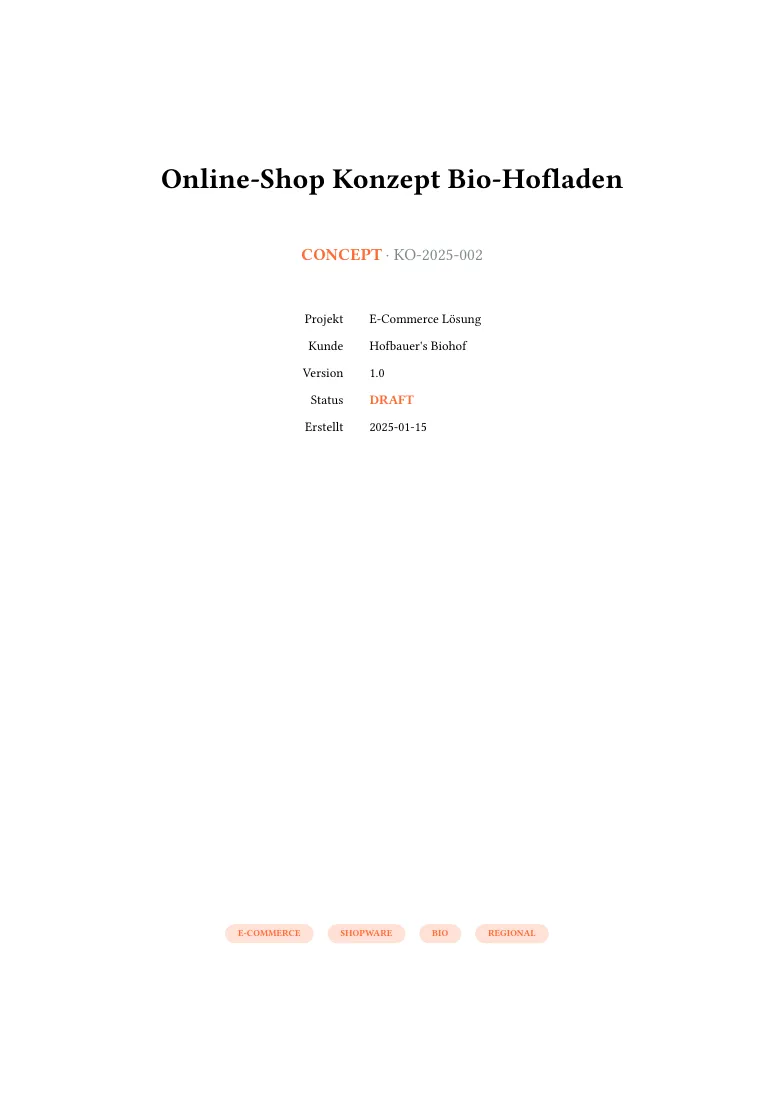
Project and client, version, status and authors on the title page; free text below.
Documentation
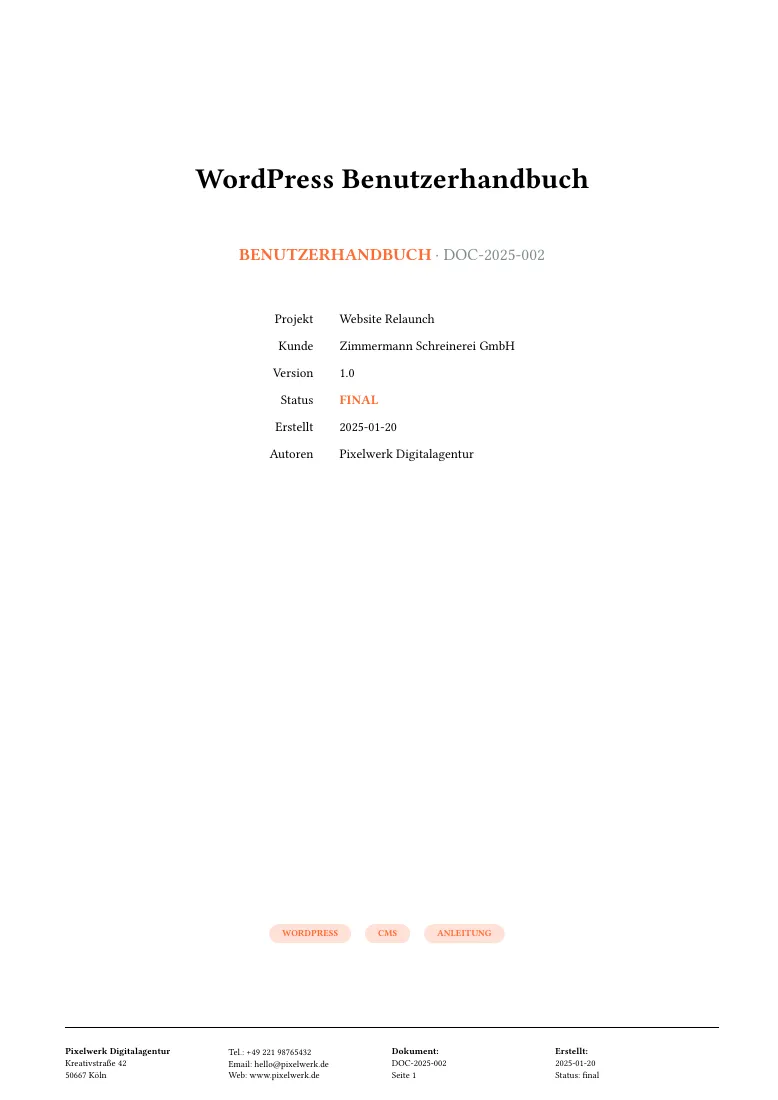
Subject, document type, version and status; code blocks are part of the layout.
Contract
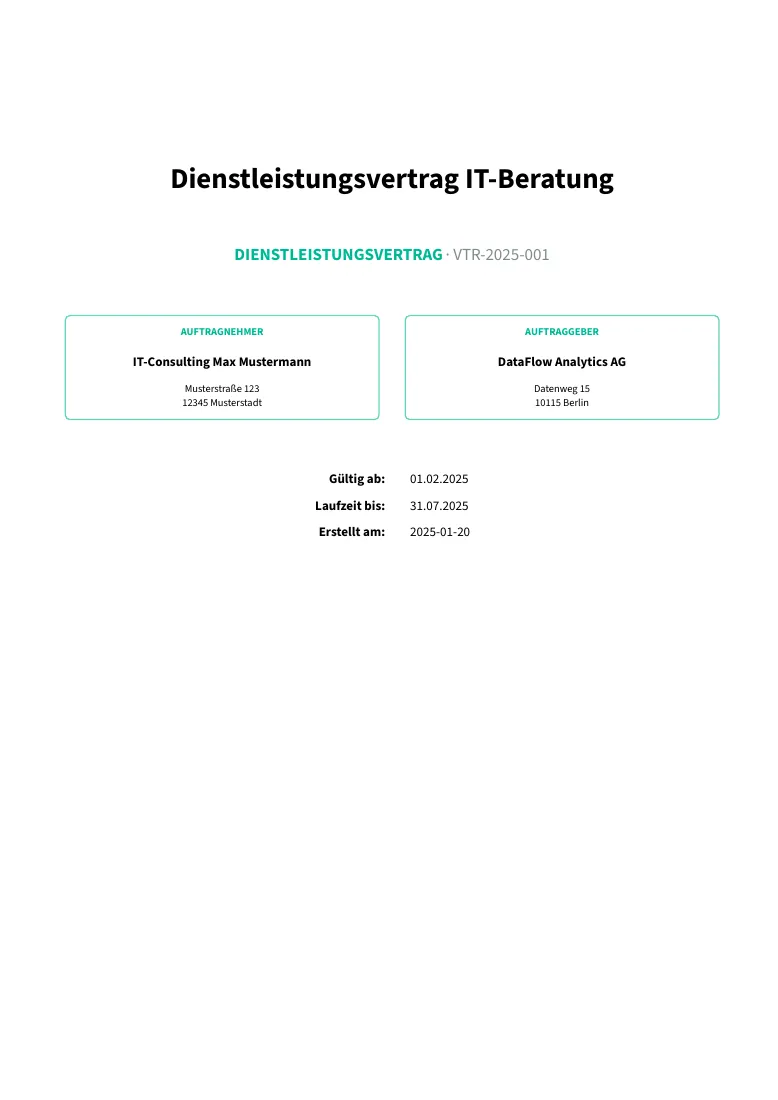
Contract type, parties, effective and termination date.
Caution
The contract template provides layout, not legal wording. Have the text checked by a lawyer.
Minutes
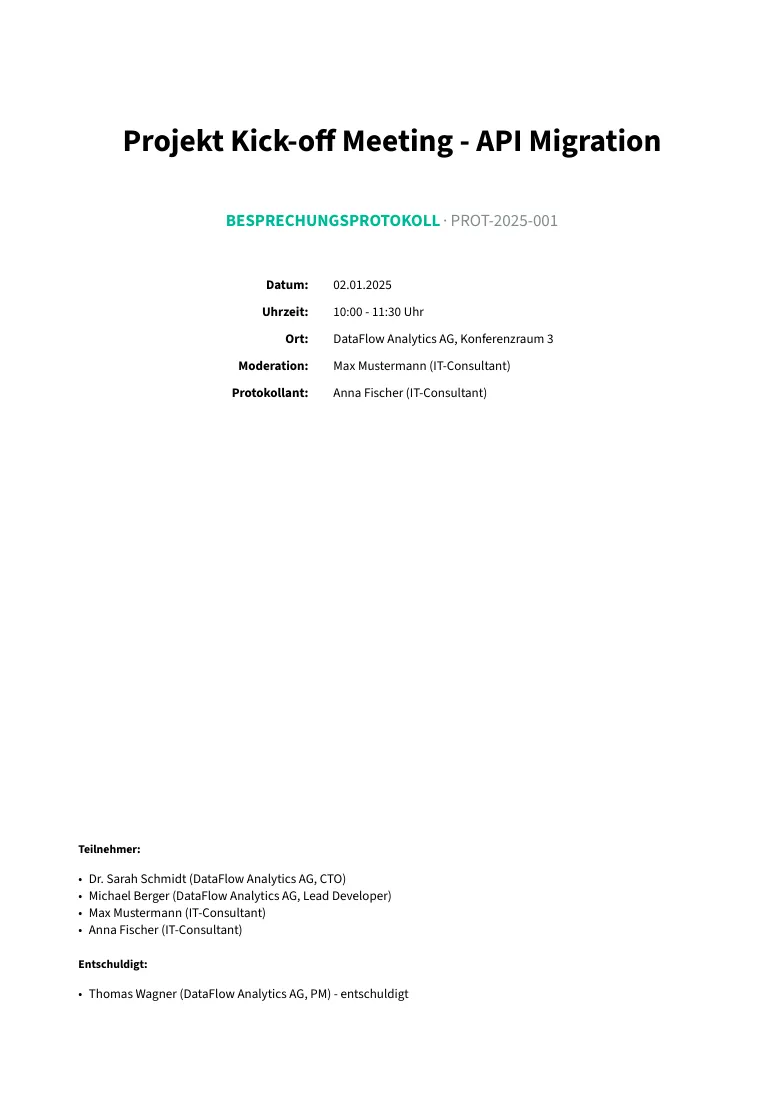
Date, time, location, participants, absent persons, moderator and note taker, as in the call above.
Specification
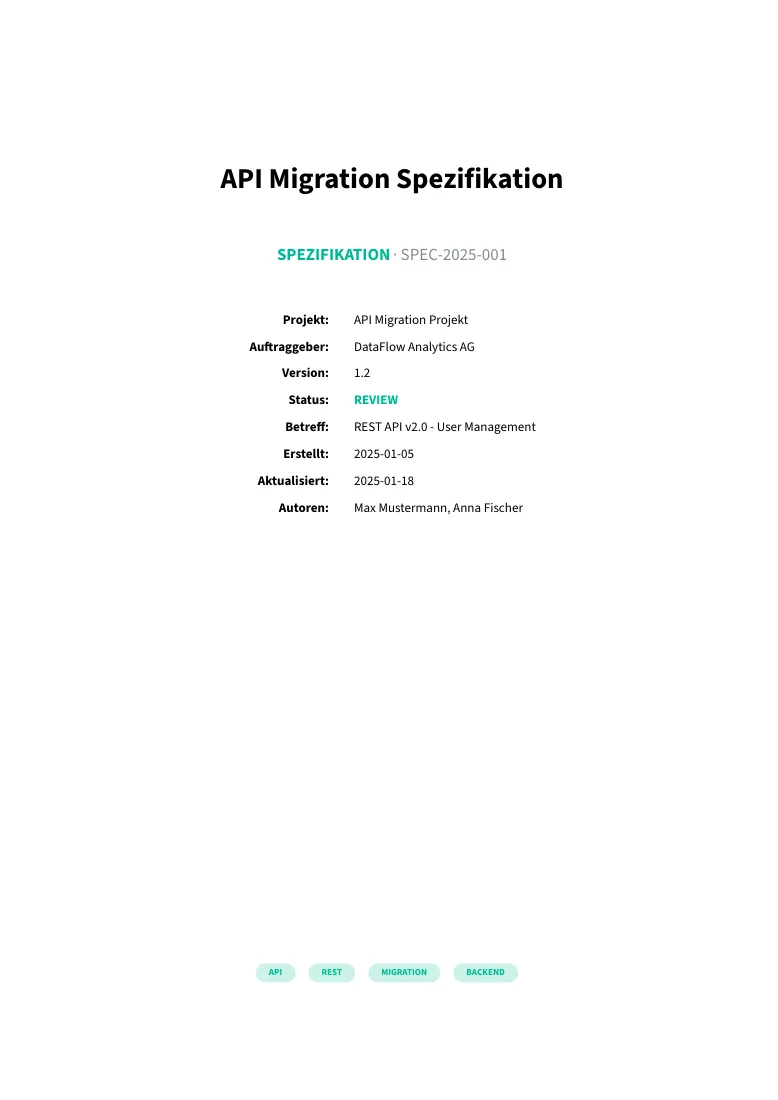
Version, last update and authors.
Proposal
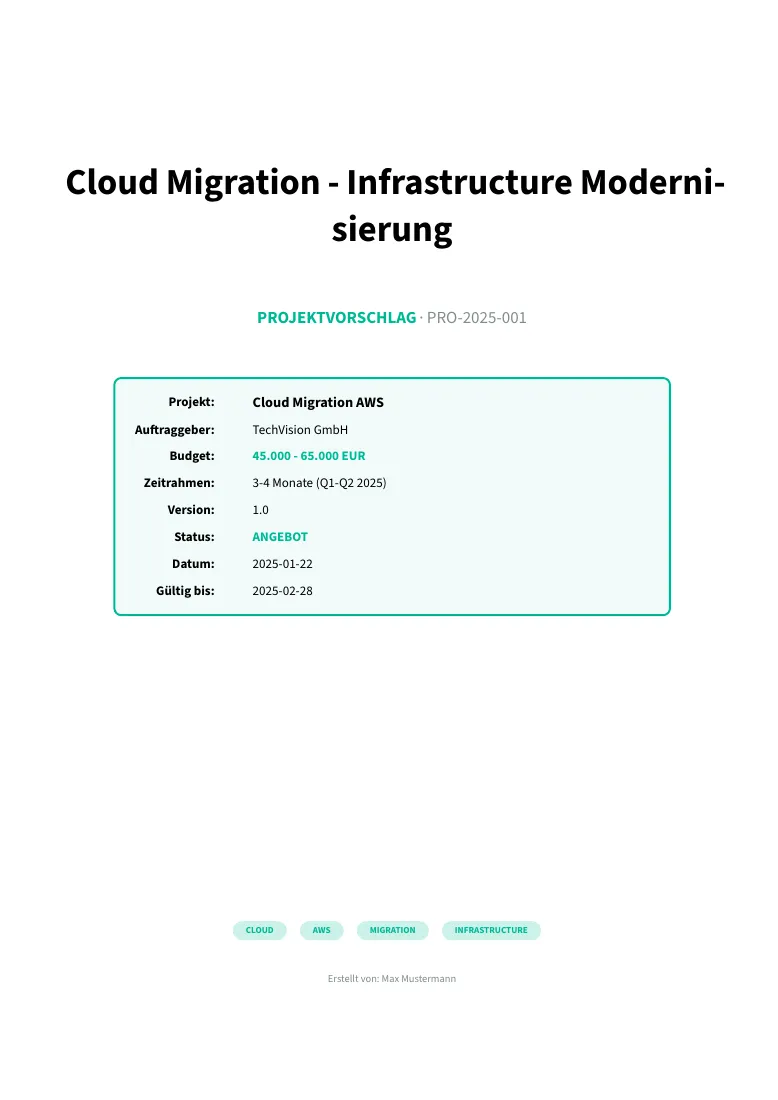
Budget, timeline and validity on the title page.
Suggestion: a proposal that is accepted becomes the base of the concept and the contract. They share title page and branding, so the set looks consistent.
SLA
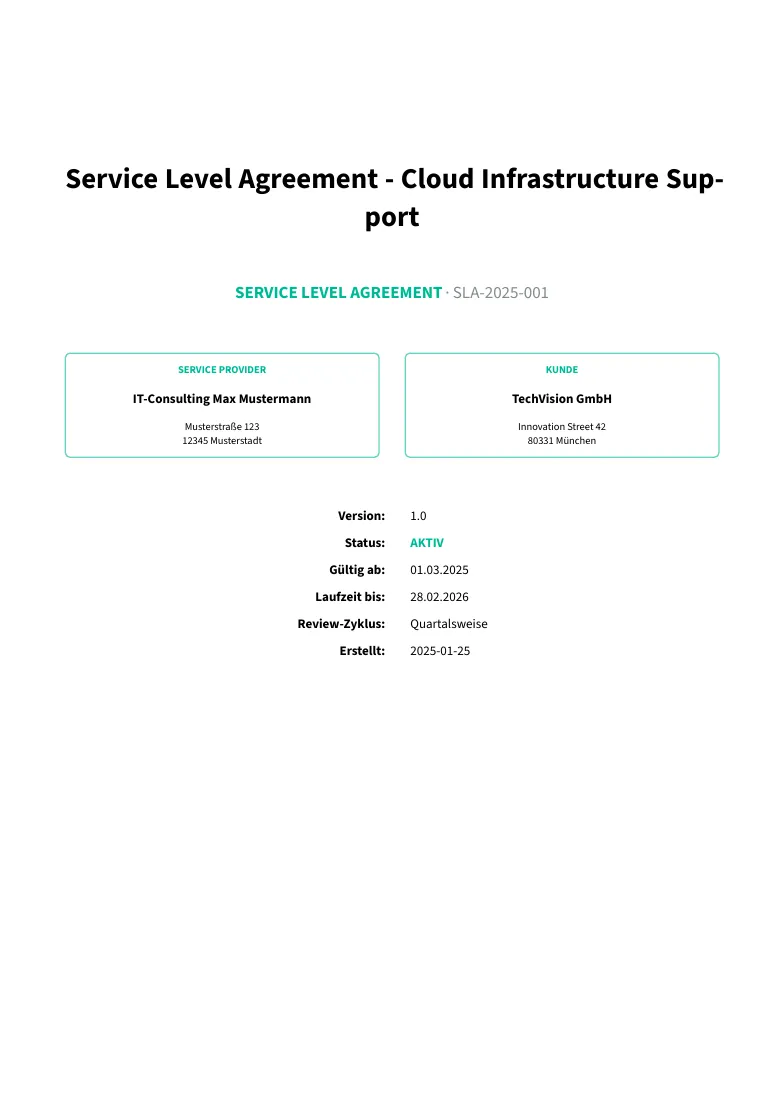
Provider, customer, effective date and review period.
Task list
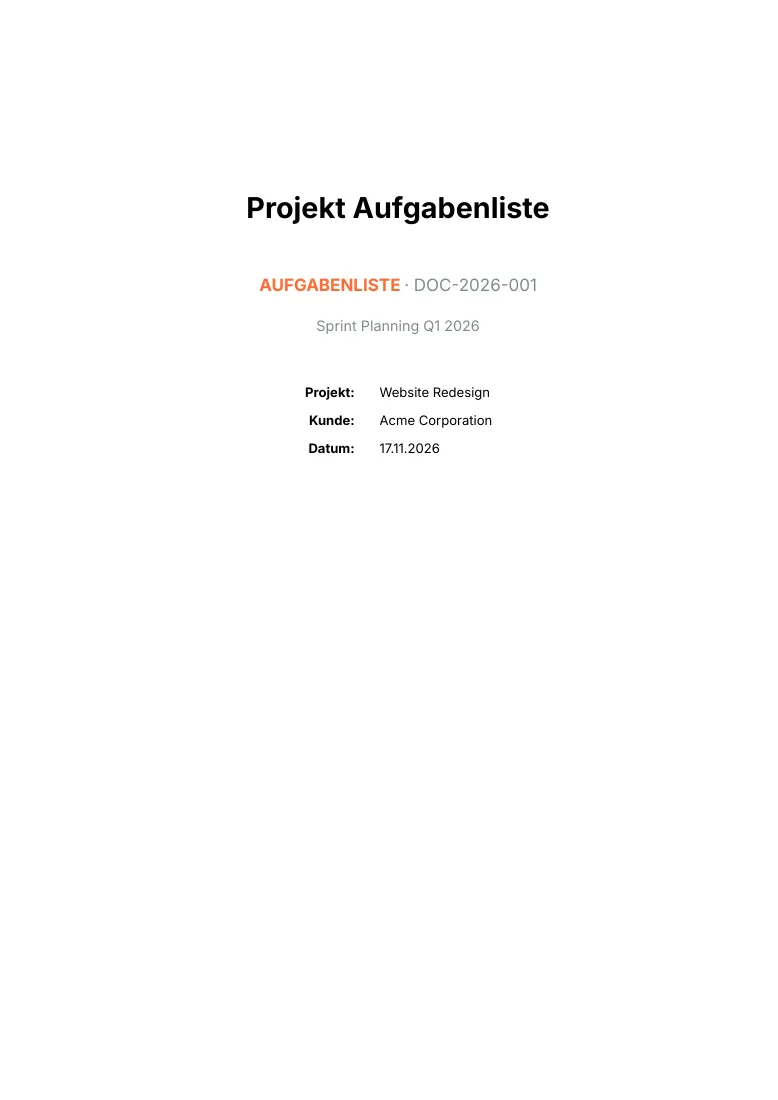
The one template here that is called as a function, not a show rule: you pass categories: with
tasks:. Each task has status, priority, due date, assignee, tags and subtasks; dependencies are
supported, too.
Suggestion: keep the tasks in data and render the list for a sprint review or a client report.